August 31, 2026
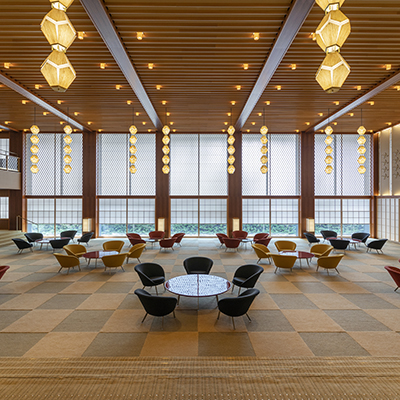
Where We Spend One-Third of Our Lives
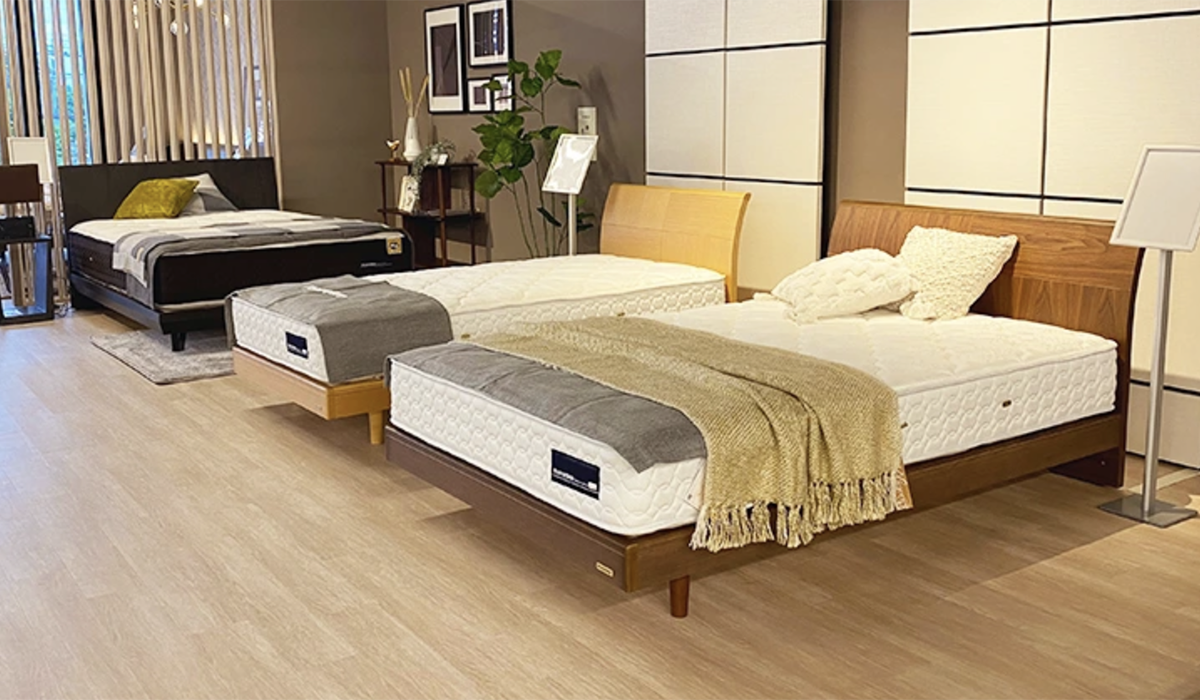 Photo sourced from the official website of BMAJ
What Japan’s Bed Industry Means by “Sleeping with Peace of Mind”
What do you look for when choosing a bed or mattress? Firmness or softness? Comfort, price, brand or design? Many of us have probably tried lying on different mattresses in a store, comparing how they feel: “This one supports my lower back better,” or “That one feels slightly softer.”Yet although we spend six, seven or even eight hours on a mattress every night, relatively few people consider what is actually inside it. Japan’s bed industry, however, believes that this deserves our attention. One initiative that embodies this thinking is the “Hygienic Mattress” certification promoted by Bed Manufacturers Association.
Choosing a Mattress Is No Longer Just About Comfort
Bed Manufacturers Association All Japan, or BMAJ, was established in 1964. Its current membership comprises nine leading bed manufacturers with production facilities in Japan. By establishing industry standards covering quality, safety, hygiene and environmental responsibility, the association has played a central role in supporting Japan’s bed industry.
Electric beds can adjust the angle of the back and legs, while some newer products connect to smartphones and other devices to monitor sleep patterns. As public interest in sleep itself has grown, beds are beginning to assume new roles. However, no matter how far the technology advances, the fundamentals remain unchanged. “Comfort is still the foundation,” Kanbe says. At the same time, consumers are beginning to look beyond comfort and consider other factors, including health, hygiene and environmental impact.
“Is This Mattress Really Safe?”
One important turning point came in the late 1990s, when “sick house syndrome” emerged as a major social concern in Japan. As awareness grew of the possible health effects of formaldehyde and other chemical substances in building materials, people began to question whether the products in their homes were truly safe. Beds, on which people spend many hours every night, were naturally no exception.A mattress is not made solely from metal springs. It contains many different materials, including polyurethane foam, cotton and other fillings, adhesives, and the outer fabric that lies closest to the body. In response, BMAJ developed standards for what it calls a “Hygienic Mattress.” Kanbe explains the underlying idea in very simple terms: “We want consumers to know that the mattress is made with materials they can use with confidence.”
In other words, the certification is intended to assure consumers about what is inside a mattress—something that cannot be judged simply by looking at the finished product.
The Hygienic Mattress standards cover such areas as formaldehyde release levels, antibacterial and deodorizing treatments, the materials used, and the blowing agents employed in polyurethane foam production. Today, the Japanese market includes an enormous variety of mattresses, both domestically produced and imported from countries around the world. This does not, of course, mean that an overseas-made mattress is necessarily of lower quality. What matters is not simply where a mattress was made, but whether consumers can determine what materials it contains and the standards under which it was manufactured. In this sense, the Hygienic Mattress label provides a visible indication of quality that would otherwise remain hidden from view.
 BMAJ “Hygienic Mattress” Certification Label
Photo sourced from the official website of BMAJ
The Other Mattress Problem: Disposal
One particularly thought-provoking topic raised during the interview was mattress disposal. According to Kanbe, spring mattresses are among the more difficult products to process as waste. It is easy to see why. They are large and cannot easily be folded. Inside, metal springs are surrounded by layers of polyurethane foam, fibers, fabric, and other materials. Mattresses are deliberately built to remain strong and retain their shape over many years of use. That same durability, however, makes them difficult to dismantle when they reach the end of their useful lives.Some local governments in Japan do not collect spring mattresses as ordinary bulky waste. Consumers may therefore need to arrange collection through a retailer or disposal by a specialist contractor. Against this background, manufacturers are beginning to reconsider how mattresses are designed. Some are exploring structures that make it easier to separate metal, fibers and other components so that the individual materials can be recycled. The value of a mattress is no longer determined solely by how well a person can sleep on it. Increasingly, the industry must also consider what happens to the product after it is no longer used—and how its materials can be returned to circulation. This is becoming one of the central challenges facing the future of bed manufacturing.
Considering Hygiene and the Environment Together
A product is not necessarily suitable as bedding simply because it is environmentally friendly. This is where bedding presents a particular challenge. Using recycled materials, for example, is desirable from a resource-circulation standpoint. However, because bedding remains in close contact with the human body for long periods, manufacturers must also verify the safety and hygiene of those materials—including what the recycled materials were originally made from.Meanwhile, the Hygienic Mattress standards stipulate that the blowing agents used to manufacture polyurethane foam must not contain substances that damage the ozone layer. The industry is therefore not choosing between environmental responsibility and human safety. It is seeking to achieve both: products that people can use with confidence while placing the smallest possible burden on the environment.
BMAJ is also looking beyond mattresses. It has established environmental standards for bed frames, including requirements concerning the timber and other materials used in their construction.
The Changing Role of Beds in an Aging Society
Japan has one of the world’s most rapidly aging populations. The role expected of beds is therefore likely to change as well. Kanbe points out that the most significant development may not be in mattresses alone, but in the bed's functions as a whole.An electric bed, for example, does more than provide a place to sleep. It can help raise a person’s upper body, make it easier to stand, or adjust the leg position. In hospitals and nursing-care facilities, reducing the physical burden on caregivers is just as important as ensuring the comfort of the person using the bed.
Hotels have different requirements. Because the overnight stay itself is part of the service, the experience of having slept well becomes an important element of hospitality. Homes, hotels, hospitals and nursing-care facilities all require different functions from their beds. Yet they share one essential objective: a good night’s sleep.
No matter how far technologies such as artificial intelligence and sleep monitoring advance, the fundamental question remains the same: Can the person sleep comfortably?
Waking Up Refreshed
What, then, constitutes “good sleep”? When asked this final question, Kanbe pauses before answering. It is difficult, he says, to define good sleep according to a single standard. People differ in physique and age. Their physical condition and daily habits also vary. Each manufacturer therefore pursues better sleep according to its own technologies, expertise and philosophy. For Kanbe personally, however, one possible answer is simple: waking up in the morning feeling refreshed.Another remark from the conversation also leaves a lasting impression: “We spend one-third of our lives in bed.” If we sleep for eight hours a day, this is literally true. When building or buying a home, people allocate their budgets among the building itself, the kitchen, furniture and interior design—and the bed may be one of the last things they choose. Yet we do not spend one-third of our lives sitting at the dining table or on the sofa. Viewed in that light, perhaps beds and mattresses deserve a little more of our attention.
BMAJ has designated September 3 as “Bed Day.” The original press release explains that the date was chosen through two forms of wordplay. The English phrase “good sleep” evokes the Japanese word gussuri, meaning to sleep soundly, while “goo” and “three” suggest the date 9/3. The date also combines kyū (休, rest), associated with nine, and min (眠, sleep), associated with three—conveying the wish that people will rest and sleep well. We lie down on our mattresses every day almost without thinking. The next time we replace one, perhaps we should ask a few questions that go beyond firmness, softness and price:
What materials are used in this mattress?
Can I entrust my body to it every night with confidence?
And what will happen to it when it is no longer needed?
Thinking about good sleep is not simply about sleeping well. It may also mean thinking more carefully about the place where we spend one-third of our lives.
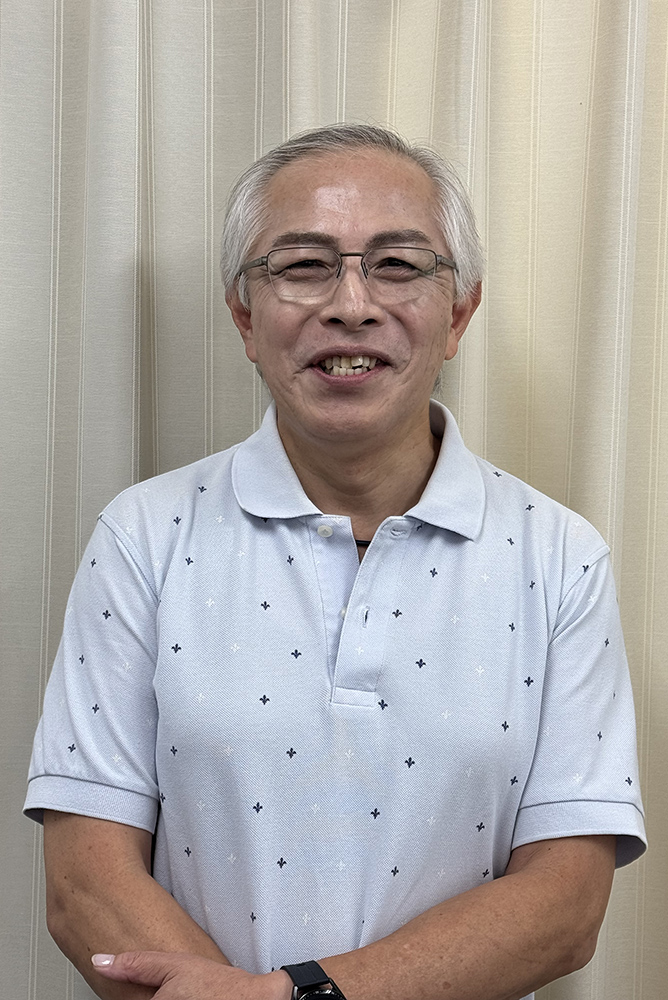
Mr. Tsutomu Kanbe, Secretary General of BMAJ
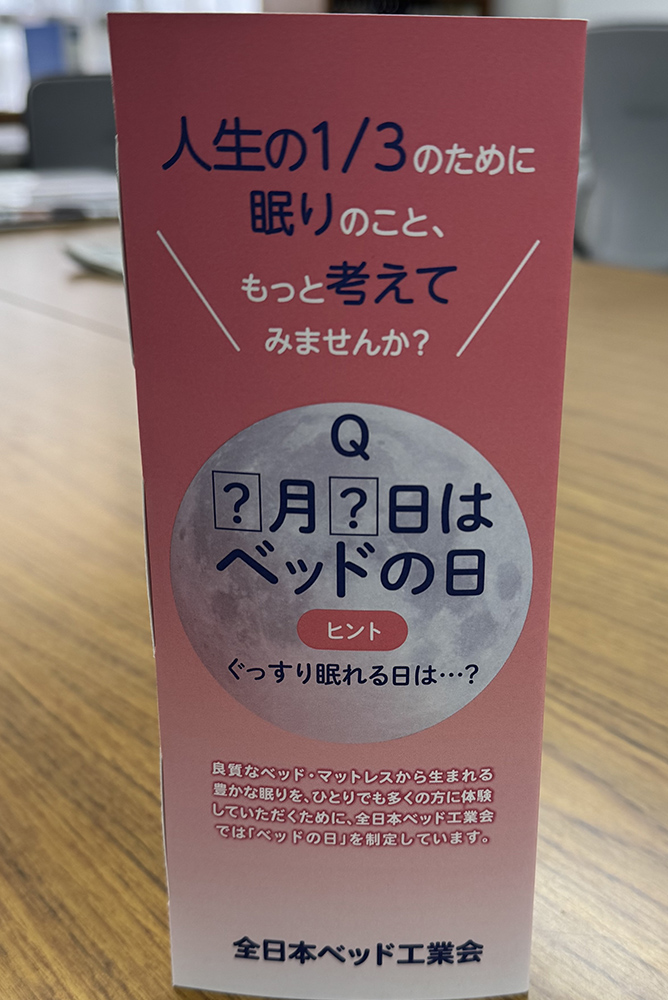
A promotional display produced by the BMAJ reads: “We spend one-third of our lives sleeping. Isn’t it time we gave sleep more thought?”