January 15, 2026
Japan’s Work Style Paradox: Shorter Hours, Lower Productivity, and a Weaker Economy
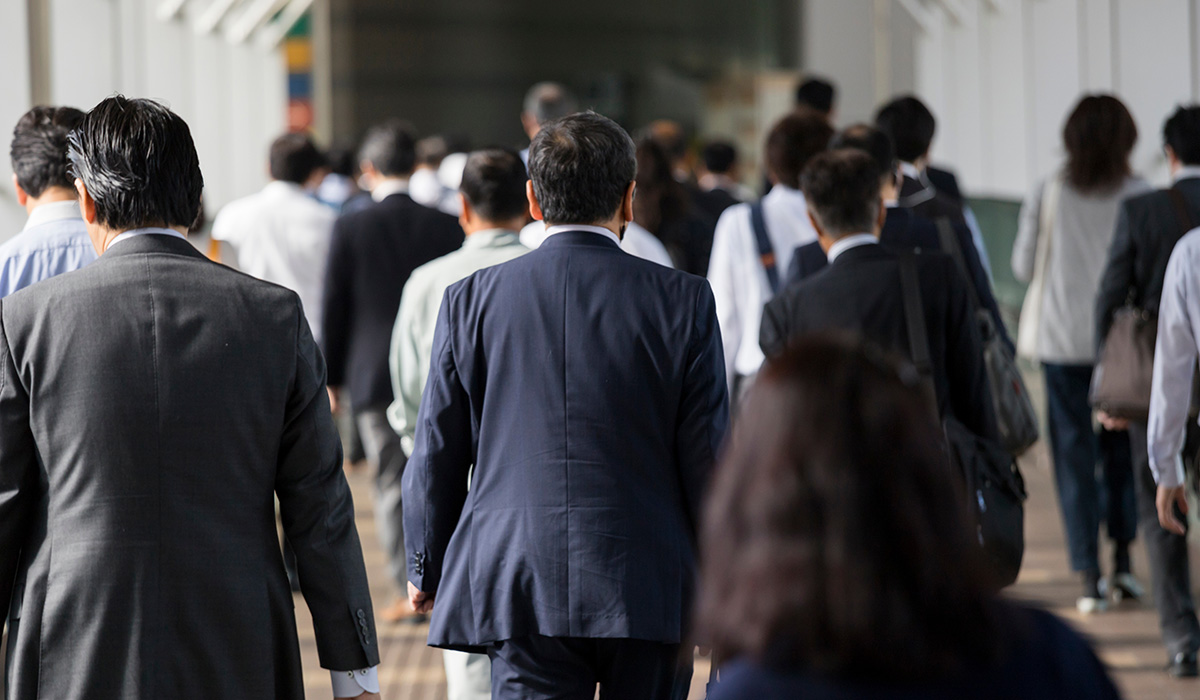
Japan was once known worldwide as a nation of tireless workers. Today, however, the reality is very different. Official statistics reveal that working hours have fallen sharply over the past three decades, while productivity remains stubbornly low compared with other advanced economies. The growing gap between time spent at work and value created has become a serious structural risk to Japan’s long-term economic vitality.
Data from the Ministry of Health, Labour and Welfare’s Monthly Labour Survey show that total actual working hours per employee, including overtime, averaged 2,064 hours a year in 1990, or 172 hours per month. By 2024, this figure had dropped to 1,643 hours annually, or 136.9 hours per month, a decline of around 20 percent. The principal driver of this trend is the steady rise of part-time employment. In the survey, part-time workers are defined as employees whose scheduled hours are shorter than those of full-time staff. Their share of the workforce increased from 12 percent in 1990 to more than 30 percent in 2024. According to Taro Saito of NLI Research Institute, the replacement of full-time workers with shorter-hour part-time employees accounts for the largest portion of the overall reduction in working hours. Since the introduction of legally binding overtime caps in 2019, the decline in hours has accelerated for both full-time and part-time workers alike.
Japan now works fewer hours even by international standards. OECD figures show that between 1990 and 2024, working hours in Japan fell by 20 percent, while those in the United States declined by only 4 percent. By 2024, Americans were working roughly 10 percent longer than their Japanese counterparts. In principle, shorter working hours are not problematic if they are matched by higher efficiency. Yet this is precisely where Japan is faltering. The Japan Productivity Center ranks Japan 28th in hourly labor productivity, the lowest among the G7 economies, while the United States ranks fourth. Japan is losing not only time at work but also its ability to convert labor into economic value. Rather than returning to a culture of excessive overtime, the priority must be to adopt technological innovations, such as generative AI, to raise output per hour.
The economic consequences are already evident. Professor Kazumasa Oguro of Hosei University estimates that if Japan had maintained its 1990 level of working hours, real GDP per capita would have grown by 68 percent by 2023, roughly in line with the United States. In reality, it increased by only 30 percent, leaving Japan well behind both the US and Europe. This stark gap illustrates how a reduction in hours without a corresponding gain in productivity erodes national economic strength. The shift toward shorter hours was driven by social necessity. In response to widespread concern over unpaid overtime and so-called black companies, the Work Style Reform Act was enacted in 2019. It set an overtime ceiling of 45 hours per month and 360 hours per year, with an absolute maximum of 720 hours even under exceptional circumstances. While these rules have constrained corporate supply capacity, they have also institutionalized protection against overwork.
As labor shortages intensify, Japanese companies are being forced to rethink how they attract and retain talent. Three-day weekends, new benefit schemes, and job-based systems that evaluate employees based on clearly defined roles rather than seniority or hours worked are gradually spreading. The challenge now is not to make people work longer, but to create environments where people want to work and where every hour produces real value.